

Wise Ancestors Announces First Conservation Challenge in Africa for the Bosenge Tree (Uapaca guineensis), a Key Host for Edible Caterpillars

Wise Ancestors announces its latest Conservation Challenge in partnership with Indigenous communities of Botsike Village and surrounding areas in the Ingende Territory, Equateur Province, Democratic Republic of Congo (DRC) and Kinshasa-based NGO Association of Indigenous Peoples for Environmental Management in the Congo (also known as APAGEC-RDC). The latest Conservation Challenge aims to crowdfund USD $24,000 to generate the first annotated reference genome for the Bosenge tree (Uapaca guineensis) and sponsor the planting of 100 seedlings near the village for habitat restoration and food security. Bosenge is a key host tree for edible caterpillars, an essential food source for the community, and has been disappearing from forests near villages, according to locals. The general public is invited to support the crowdfund by donating to Conservation Challenge #8 on the Wise Ancestors Platform. African-based sequencing facilities and bioinformaticians are invited to apply as collaborators to complete technical aspects of the project, such as DNA and RNA extractions and sequencing via long-read, Hi-C and RNA-seq methods, and receive compensation for their work.
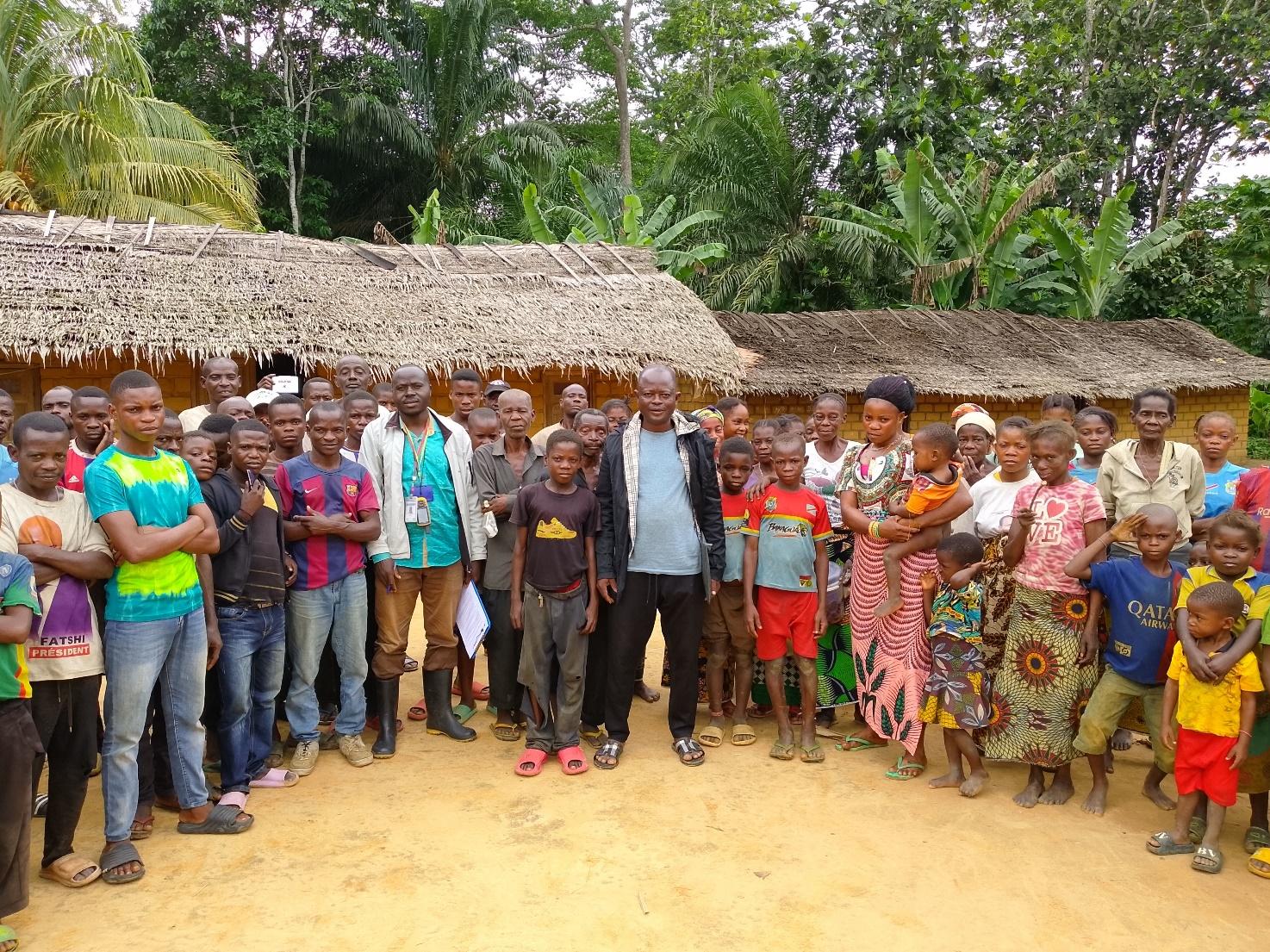
When Conservation Challenge #8 is fully funded and the technical work completed, it will represent the first reference genome for the genus Uapaca, filling a critical gap in the global effort led by the Earth Biogenome Project (EBP) to record the genome sequences of all eukaryotic life forms. Despite their importance to local communities for both food sovereignty and economic livelihoods, only a few caterpillar tree species have been genomically characterized, and none within the Uapaca genus. In line with the protocols of EBP affiliate African BioGenome Project, a continent-wide scientific initiative to sequence and catalog the genomes of Africa’s biodiversity, all technical work for the initiative will be completed in Africa.
This Conservation Challenge emerged from a connection first forged in November 2024, when members of the Wise Ancestors team first met Mardoche Bokonga, coordinator of APAGEC-RDC, at the Sixteenth Meeting of the Conference of the Parties to the Convention on Biological Diversity (COP16) in Cali, Colombia. It was apparent from early conversations that Wise Ancestors and APAGEC-RDC had similar goals: supporting Indigenous rights and protecting and restoring biodiversity. Forests in the Ingende Territory, Equateur Province of Democratic Republic of Congo are in serious danger as deforestation from timber and agriculture industries has led to dramatic loss of biodiversity and has impacted Indigenous communities’ livelihoods. Bokonga shared stories of no longer seeing lions, elephants, chameleons, and leopards during hunts, as well as the disappearance of caterpillar trees, which host the caterpillars that are a staple of their diet. The Democratic Republic of Congo is one of six countries that share the Congo Basin, home to the world’s second largest rainforest and one of the planet’s most important carbon sinks after the Amazon rainforest. Global Forest Watch data indicate that as of 2025 11% of the year 2000 tree coverage was lost, which is the equivalent of 14 gigatons of CO2 emissions.
Free, prior and informed consent is essential for all Wise Ancestors’ Conservation Challenges, and for this one in particular, Wise Ancestors hired Jean-Léon Kambale, a botanist at the University of Kisangani’s Center for Biodiversity Surveillance, to engage directly with the Indigenous communities of Botsike Village, Likata, and Bokatola. Kamable helped the Wise Ancestors team understand how consent is established with communities who typically do not sign documents or contracts. Instead, for these communities, consent is established through actions such as food offerings and invitations to enter the forest in their territory. During their first meeting with the Botsike Village community, Kambale and Bokonga were invited to enter the forest with community members to help collect Bosenge tree saplings for future replanting closer to Botsike village.
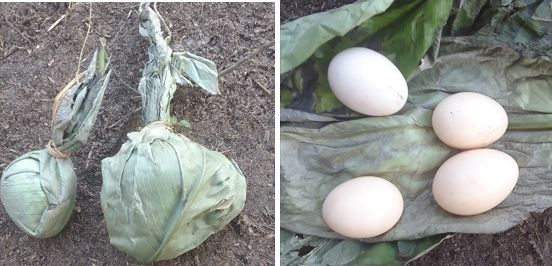
At the second meeting in March of 2026, eggs were offered, which according to Kambale, “holds strong symbolic value.” He added: “Presenting eggs is, according to their culture, a clear and solemn sign of acceptance. The fact that we received eggs from them—a gesture they do not extend to just anyone—therefore constitutes additional and meaningful evidence of their consent.”
Discussing the benefits of the project, Bokonga explained, “For the means of subsistence, the production of caterpillars will be increased because with the industrial exploitation of wood almost all the trees have been cut down and this production will serve for food self-sufficiency.” He went on to say, “APAGEC is pleased to work with Wise Ancestors because its objectives of protecting biodiversity, conserving nature, and promoting traditional knowledge align with Wise Ancestors' mission.”
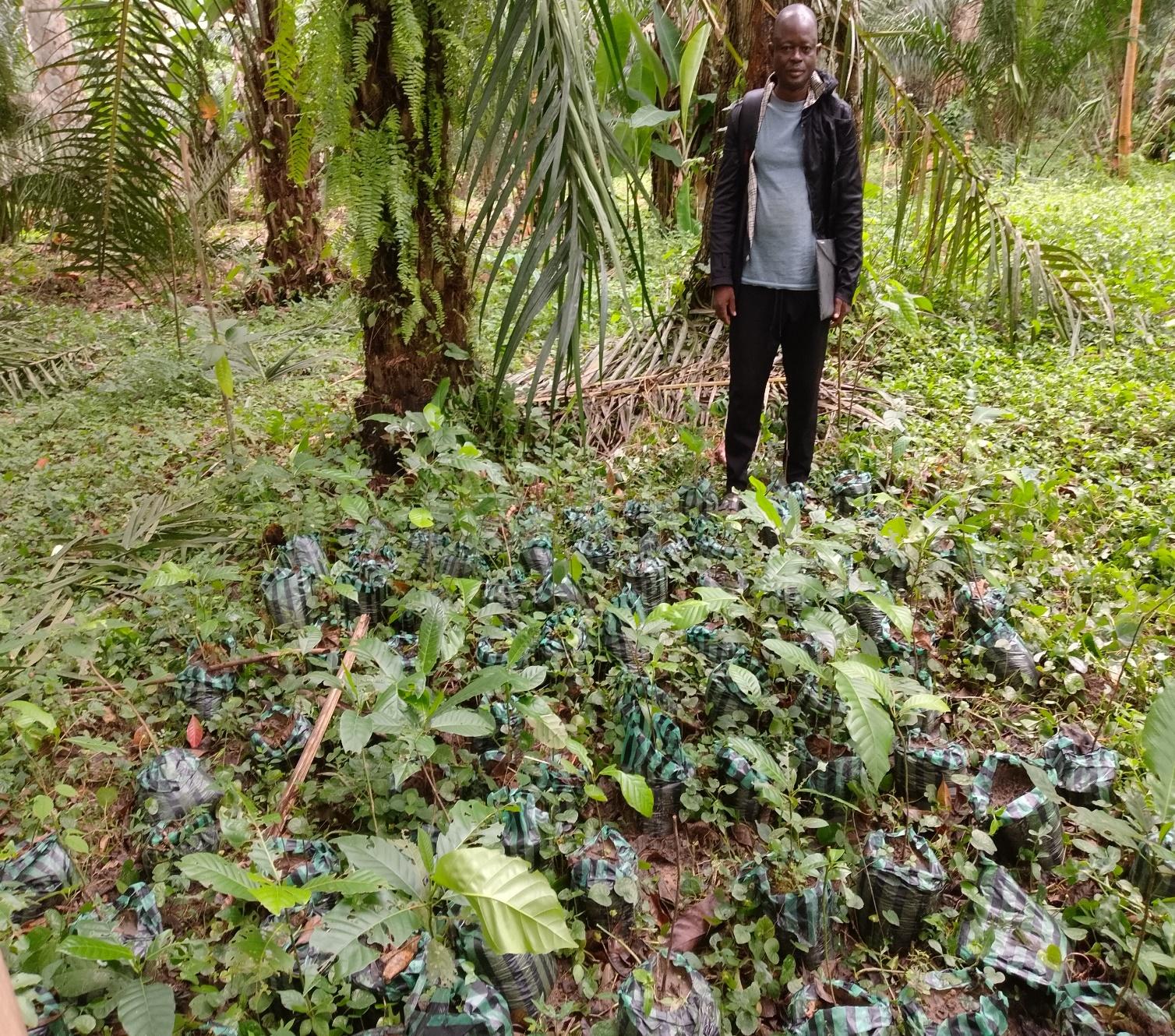
On the uniqueness of this effort, Dr. Ann Pace, Co-Founder and Executive Director of Wise Ancestors shared, "This project represents our first non-pilot Conservation Challenge. It’s been over a year and a half journey to get to this point, but the time invested in relationship building is well worth the intended outcome, and paves the way for additional projects in the area. Our crowdfunding campaign is an easy and meaningful way for the general public to support this effort to sequence and plant the Bosenge tree, which is ultimately a project to benefit the Botsike and other Indigenous communities both nutritionally and economically.”
Regarding the lack of genomic information on the Uapaca genus, "The Bosenge tree, a vital food and economic resource for local communities, would have been sequenced long ago in wealthier nations. This Conservation Challenge for Uapaca guineensis promotes equitable research and highlights the importance of local collaboration and letting the local communities take the lead on which species to focus on.” Dr. Solenne Correard, Wise Ancestors’ Genomic Director said.
"We appreciate the trust Botsike Village has placed in Wise Ancestors and are excited to partner with them on this community-led effort to address food sovereignty and food security at the local scale while contributing to global efforts for biodiversity conservation. We don’t approach this as a one off project, but instead as a new relationship with the shared goal of supporting the ecosystem and livelihoods in the region,” Katie Jones, Wise Ancestors’ Community Engagement Director added.
Latest posts


.jpg)

Donate
Contribute to help Wise Ancestors operate, or to directly advance efforts to safeguard Earth’s genetic diversity.
Contributions are tax-deductible to the extent allowed by law.