

As a nonprofit organization who works with peoples across the world to protect biodiversity and support Indigenous Rights, we’d like to acknowledge pertinent global frameworks and goals that align with our mission and projects.

2050 Vision
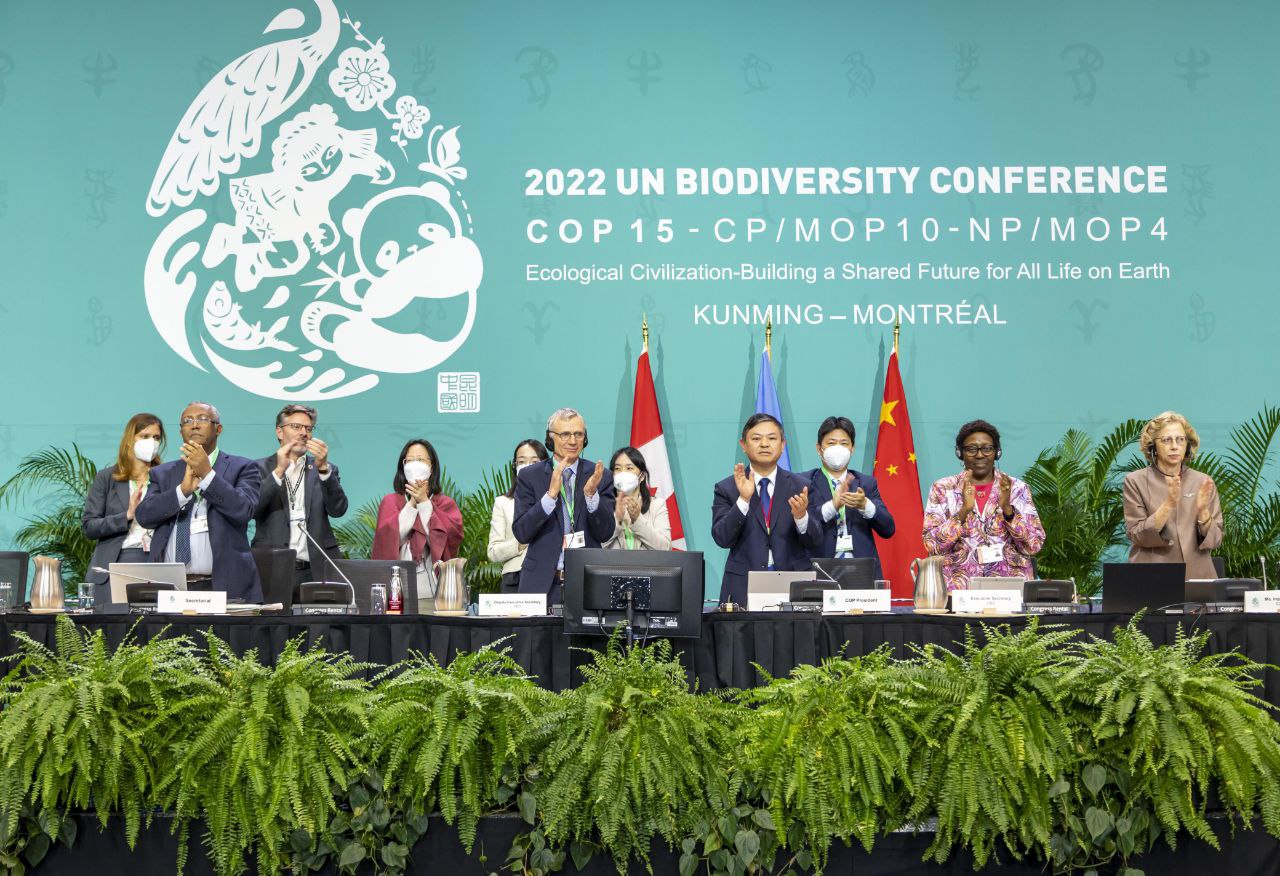
The vision of the Kunming-Montreal Global Biodiversity Framework is a world of living in harmony with nature where “by 2050, biodiversity is valued, conserved, restored and wisely used, maintaining ecosystem services, sustaining a healthy planet and delivering benefits essential for all people.” It sets four 2050 goals to achieve this vision:
GOAL A: Protect and Restore
The integrity, connectivity and resilience of all ecosystems are maintained, enhanced, or restored, substantially increasing the area of natural ecosystems by 2050;
Human induced extinction of known threatened species is halted, and, by 2050, the extinction rate and risk of all species are reduced tenfold and the abundance of native wild species is increased to healthy and resilient levels;
The genetic diversity within populations of wild and domesticated species, is maintained, safeguarding their adaptive potential.

GOAL B: Prosper with Nature
Biodiversity is sustainably used and managed and nature’s contributions to people, including ecosystem functions and services, are valued, maintained and enhanced, with those currently in decline being restored, supporting the achievement of sustainable development for the benefit of present and future generations by 2050.
GOAL C: Share Benefits Fairly
The monetary and non-monetary benefits from the utilization of genetic resources and digital sequence information on genetic resources, and of traditional knowledge associated with genetic resources, as applicable, are shared fairly and equitably, including, as appropriate with indigenous peoples and local communities, and substantially increased by 2050, while ensuring traditional knowledge associated with genetic resources is appropriately protected, thereby contributing to the conservation and sustainable use of biodiversity, in accordance with internationally agreed access and benefit-sharing instruments.
GOAL D: Invest and Collaborate
Adequate means of implementation, including financial resources, capacity-building, technical and scientific cooperation, and access to and transfer of technology to fully implement the Kunming-Montreal Global Biodiversity Framework are secured and equitably accessible to all Parties, especially developing country Parties, in particular the least developed countries and small island developing States, as well as countries with economies in transition, progressively closing the biodiversity finance gap of $700 billion per year, and aligning financial flows with the Kunming-Montreal Global Biodiversity Framework and the 2050 Vision for biodiversity.
2030 Mission
The mission of the Kunming-Montreal Global Biodiversity Framework for the period up to 2030, towards the 2050 vision is: To take urgent action to halt and reverse biodiversity loss to put nature on a path to recovery for the benefit of people and planet by conserving and sustainably using biodiversity and by ensuring the fair and equitable sharing of benefits from the use of genetic resources, while providing the necessary means of implementation.
Plan and Manage all Areas To Reduce Biodiversity Loss
Ensure that all areas are under participatory, integrated, and biodiversity inclusive spatial planning and/or effective management processes addressing land and sea use change, to bring the loss of areas of high biodiversity importance, including ecosystems of high ecological integrity, close to zero by 2030, while respecting the rights of indigenous peoples and local communities.
Restore 30% of all Degraded Ecosystems
Ensure that by 2030 at least 30 percent of areas of degraded terrestrial, inland water, and coastal and marine ecosystems are under effective restoration, in order to enhance biodiversity and ecosystem functions and services, ecological integrity and connectivity.
Conserve 30% of Land, Waters and Seas
Ensure and enable that by 2030 at least 30 percent of terrestrial, inland water, and of coastal and marine areas, especially areas of particular importance for biodiversity and ecosystem functions and services, are effectively conserved and managed through ecologically representative, well-connected and equitably governed systems of protected areas and other effective area-based conservation measures, recognizing indigenous and traditional territories where applicable, and integrated into wider landscapes, seascapes and the ocean, while ensuring that any sustainable use, where appropriate in such areas, is fully consistent with conservation outcomes, recognizing and respecting the rights of indigenous peoples and local communities, including over their traditional territories.
Halt Species Extinction, Protect Genetic Diversity, and Manage Human-Wildlife Conflicts
Ensure urgent management actions to halt human induced extinction of known threatened species and for the recovery and conservation of species, in particular threatened species, to significantly reduce extinction risk, as well as to maintain and restore the genetic diversity within and between populations of native, wild and domesticated species to maintain their adaptive potential, including through in situ and ex situ conservation and sustainable management practices, and effectively manage human-wildlife interactions to minimize human-wildlife conflict for coexistence.
Ensure Sustainable, Safe and Legal Harvesting and Trade of Wild Species
Ensure that the use, harvesting and trade of wild species is sustainable, safe and legal, preventing overexploitation, minimizing impacts on non-target species and ecosystems, and reducing the risk of pathogen spill-over, applying the ecosystem approach, while respecting and protecting customary sustainable use by indigenous peoples and local communities.
Minimize the Impacts of Climate Change on Biodiversity and Build Resilience
Minimize the impact of climate change and ocean acidification on biodiversity and increase its resilience through mitigation, adaptation, and disaster risk reduction actions, including through nature-based solution and/or ecosystem-based approaches, while minimizing negative and fostering positive impacts of climate action on biodiversity.
Manage Wild Species Sustainably To Benefit People
Ensure that the management and use of wild species are sustainable, thereby providing social, economic and environmental benefits for people, especially those in vulnerable situations and those most dependent on biodiversity, including through sustainable biodiversity-based activities, products and services that enhance biodiversity, and protecting and encouraging customary sustainable use by indigenous peoples and local communities.
Enhance Biodiversity and Sustainability in Agriculture, Aquaculture, Fisheries, and Forestry
Ensure that areas under agriculture, aquaculture, fisheries and forestry are managed sustainably, in particular through the sustainable use of biodiversity, including through a substantial increase of the application of biodiversity friendly practices, such as sustainable intensification, agroecological and other innovative approaches contributing to the resilience and long-term efficiency and productivity of these production systems and to food security, conserving and restoring biodiversity and maintaining nature's contributions to people, including ecosystem functions and services.
Restore, Maintain and Enhance Nature's Contributions to People
Restore, maintain and enhance nature's contributions to people, including ecosystem functions and services, such as regulation of air, water, and climate, soil health, pollination and reduction of disease risk, as well as protection from natural hazards and disasters, through nature-based solutions and/or ecosystem-based approaches for the benefit of all people and nature.
Enhance Green Spaces and Urban Planning for Human Well-Being and Biodiversity
Significantly increase the area and quality and connectivity of, access to, and benefits from green and blue spaces in urban and densely populated areas sustainably, by mainstreaming the conservation and sustainable use of biodiversity, and ensure biodiversity-inclusive urban planning, enhancing native biodiversity, ecological connectivity and integrity, and improving human health and well-being and connection to nature and contributing to inclusive and sustainable urbanization and the provision of ecosystem functions and services.
Increase the Sharing of Benefits From Genetic Resources, Digital Sequence Information and Traditional Knowledge
Take effective legal, policy, administrative and capacity-building measures at all levels, as appropriate, to ensure the fair and equitable sharing of benefits that arise from the utilization of genetic resources and from digital sequence information on genetic resources, as well as traditional knowledge associated with genetic resources, and facilitating appropriate access to genetic resources, and by 2030 facilitating a significant increase of the benefits shared, in accordance with applicable international access and benefit-sharing instruments.
Strengthen Biosafety and Distribute the Benefits of Biotechnology
Establish, strengthen capacity for, and implement in all countries biosafety measures as set out in Article 8(g) of the Convention on Biological Diversity and measures for the handling of biotechnology and distribution of its benefits as set out in Article 19 of the Convention.
Mobilize $200 Billion per Year for Biodiversity From all Sources, Including $30 Billion Through International Finance
Substantially and progressively increase the level of financial resources from all sources, in an effective, timely and easily accessible manner, including domestic, international, public and private resources, in accordance with Article 20 of the Convention, to implement national biodiversity strategies and action plans, by 2030 mobilizing at least 200 billion United States dollars per year, including by:
- Increasing total biodiversity related international financial resources from developed countries, including official development assistance, and from countries that voluntarily assume obligations of developed country Parties, to developing countries, in particular the least developed countries and small island developing States, as well as countries with economies in transition, to at least US$ 20 billion per year by 2025, and to at least US$ 30 billion per year by 2030;
- Significantly increasing domestic resource mobilization, facilitated by the preparation and implementation of national biodiversity finance plans or similar instruments according to national needs, priorities and circumstances;
- Leveraging private finance, promoting blended finance, implementing strategies for raising new and additional resources, and encouraging the private sector to invest in biodiversity, including through impact funds and other instruments;
- Stimulating innovative schemes such as payment for ecosystem services, green bonds, biodiversity offsets and credits, benefit-sharing mechanisms, with environmental and social safeguards;
- Optimizing co-benefits and synergies of finance targeting the biodiversity and climate crises;
- Enhancing the role of collective actions, including by indigenous peoples and local communities, Mother Earth centric actions and non-market-based approaches including community based natural resource management and civil society cooperation and solidarity aimed at the conservation of biodiversity;
- Enhancing the effectiveness, efficiency and transparency of resource provision and use.
Strengthen Capacity-Building, Technology Transfer, and Scientific and Technical Cooperation for Biodiversity
Strengthen capacity-building and development, access to and transfer of technology, and promote development of and access to innovation and technical and scientific cooperation, including through South-South, North-South and triangular cooperation, to meet the needs for effective implementation, particularly in developing countries, fostering joint technology development and joint scientific research programmes for the conservation and sustainable use of biodiversity and strengthening scientific research and monitoring capacities, commensurate with the ambition of the goals and targets of the framework.
Ensure That Knowledge Is Available and Accessible To Guide Biodiversity Action
Ensure that the best available data, information and knowledge, are accessible to decision makers, practitioners and the public to guide effective and equitable governance, integrated and participatory management of biodiversity, and to strengthen communication, awareness-raising, education, monitoring, research and knowledge management and, also in this context, traditional knowledge, innovations, practices and technologies of indigenous peoples and local communities should only be accessed with their free, prior and informed consent, in accordance with national legislation.
Ensure Participation in Decision-Making and Access to Justice and Information Related to Biodiversity for all
Ensure the full, equitable, inclusive, effective and gender-responsive representation and participation in decision-making, and access to justice and information related to biodiversity by indigenous peoples and local communities, respecting their cultures and their rights over lands, territories, resources, and traditional knowledge, as well as by women and girls, children and youth, and persons with disabilities and ensure the full protection of environmental human rights defenders.
Through our Conservation Challenge model, Wise Ancestors is committed to supporting the following SDGs:
End hunger, achieve food security and improved nutrition and promote sustainable agriculture.
Ensure availability and sustainable management of water and sanitation for all.
Promote sustained, inclusive and sustainable economic growth, full and productive employment and decent work for all.
Build resilient infrastructure, promote inclusive and sustainable industrialization and foster innovation.
Reduce inequality within and among countries.
Make cities and human settlements inclusive, safe, resilient and sustainable.
Ensure sustainable consumption and production patterns.
Take urgent action to combat climate change and its impacts.
Conserve and sustainably use the oceans, seas and marine resources for sustainable development.
Protect, restore and promote sustainable use of terrestrial ecosystems, sustainably manage forests, combat desertification, and halt and reverse land degradation and halt biodiversity loss.
Strengthen the means of implementation and revitalize the global partnership for sustainable development.
The Latest Stories

.jpg)
Donate
Contribute to help Wise Ancestors operate, or to directly advance efforts to safeguard Earth’s genetic diversity.
Contributions are tax-deductible to the extent allowed by law.