

Draft Reference Genome Completed for Bermuda’s National Tree: The Critically Endangered Bermuda Cedar
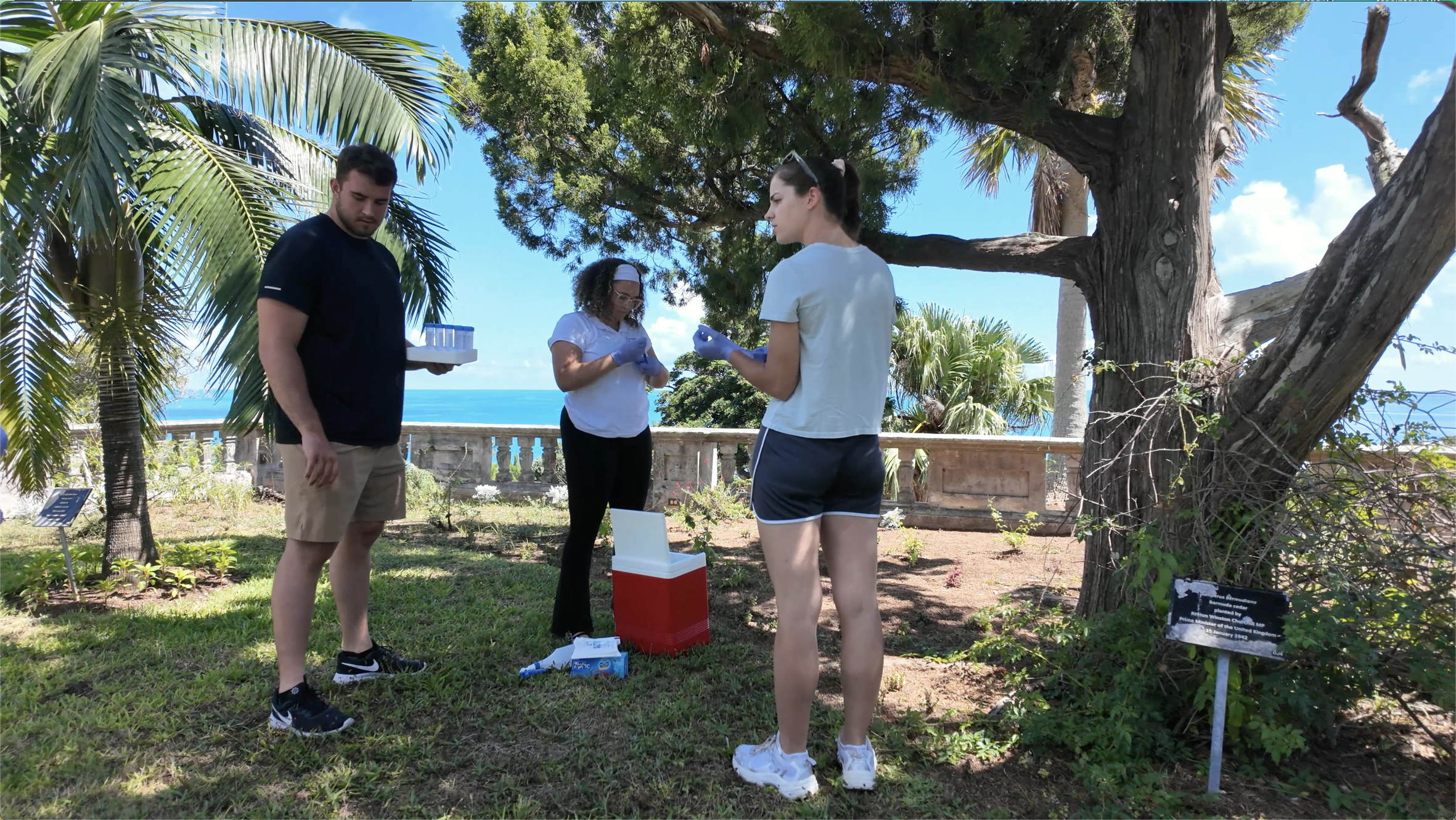
Hamilton, Bermuda (8 December 2025)— BioQuest proudly announces the completion of a draft reference genome for the critically endangered Bermuda Cedar (Juniperus bermudiana). This is the first step in producing a fully annotated reference genome as a part of a series of conservation initiatives in partnership with US-based NGO Wise Ancestors. In a first for botanical conservation genomics research on the island, all sampling and sequencing was completed by local NGO BioQuest, with financial support provided by Wise Ancestors, Global Atlantic and Roche through the Bermuda College. The end goal of this project is to generate the first publicly available annotated reference genome for the Bermuda Cedar. This would equip researchers, conservationists, and policymakers to conserve, study, and potentially restore the native species across the archipelago, aiding the ability of Bermuda’s ecosystems to be resilient to climate change.
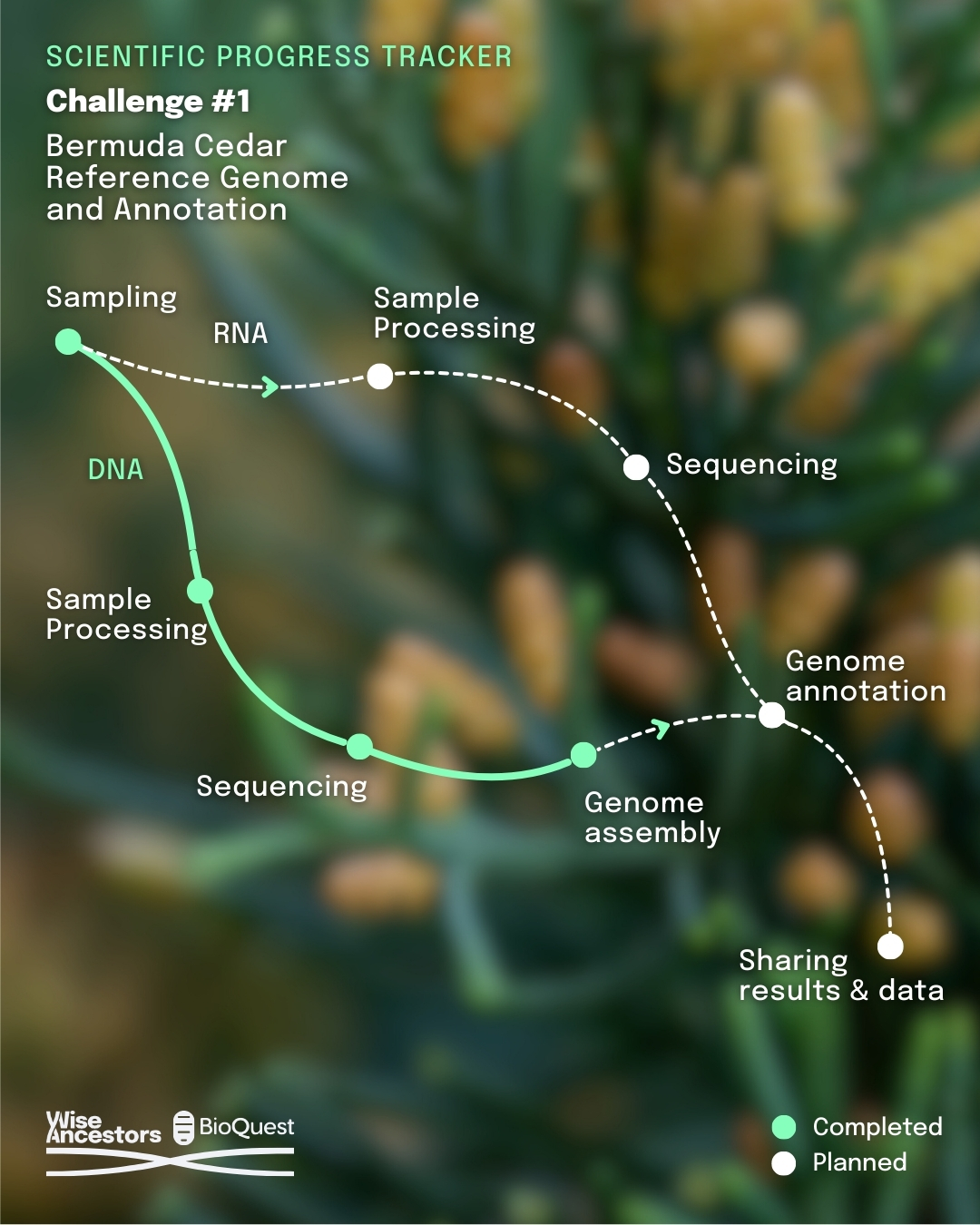
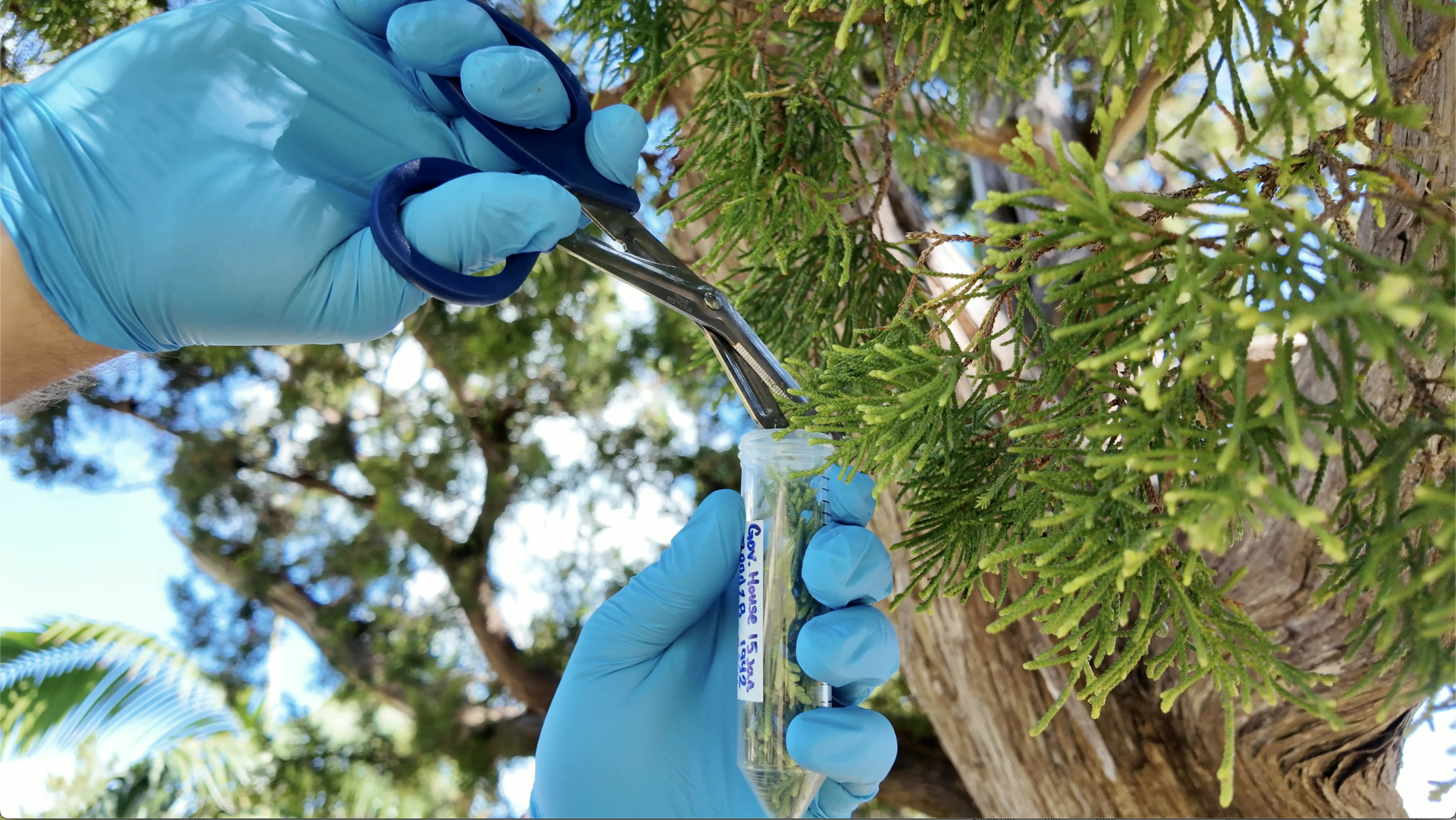
To generate this reference genome, the BioQuest team overcame many challenges – from selecting the best representative tree to coordinating liquid nitrogen on the island which is essential for sampling and DNA extraction. The team sampled what is likely to be a native Bermuda Cedar rather than a hybridized tree species based on expert advice. Myles Darrel of Bermuda National Trust was able to provide key knowledge to help choose this “chosen tree”. BioQuest determined that the best candidate tree was that planted by Sir Winston Churchill at Government House on January 15, 1942 whilst on a visit during World War II, nearly a year before records indicate the infestation killing approximately 90% of native Bermuda Cedars began.

Due to the work of many conservation genetics teams, it is known that trees have much larger genomes than most other species. This meant that the amount of data that had to be generated was the most per sample the BioQuest team has done to date. So far, the BioQuest team has sequenced the Bermuda petrel (national bird), Bermuda skink (national lizard), and now the national tree. This latest draft genome is almost 12 times bigger than the cahow reference and 4 times larger than the human genome, at 11.75 Gigabases. This is by far the largest ever sequenced and assembled by the BioQuest team.

“This is about more than just genetics. It’s about honouring Bermuda’s ecological roots and future-proofing our biodiversity with local talent,” Dr Carika Weldon, Co-Founder and Director of Research at BioQuest. “To showcase global science expertise right here at home is something we aim to replicate in other projects in Bermuda and beyond.”
“At every step of this project we learn something new, and we still don’t know what we don’t know. For example we may find that what are thought to be ancient Bermuda Cedars were already hybrids, or determine that propagating original Bermuda Cedars en-masse might just give the scale infestation an opportunity to return. However, what is clear is that the ability to test trees to determine if they are in fact “pure” or to what extent they have been hybridized, which up to now was impossible if not prohibitively expensive, will help answer these questions and allow for better informed management decisions.” Jean-Pierre Rouja, Co-Founder and Executive Director at BioQuest.
What’s Next: A New Genomic Challenge Begins
With this success in hand, Wise Ancestors and BioQuest now turn their attention to fundraising for the second Conservation Challenge for the Bermuda Cedar: an equally urgent priority: the Development of a Genetic Test to Detect Hybridisation in Juniperus Trees and Biobanking. After the scale infestation in the mid 1940s, many junipers from outside of Bermuda were introduced with the intent of restoring the damaged ecosystem, however, with that came hybridization between native and non-native juniper species. The goal for the second Conservation Challenge is to generate sequence data from native and imported trees to assess if they can be differentiated based on genomic data and pave the way to the development of a genetic test that could distinguish Bermuda Cedars from ornamental and hybrid varieties that are less well-suited to the island ecosystem. If successful, this Challenge will also support biobanking samples of native Bermuda Cedars to better protect, and if deemed appropriate, propagate the endemic Bermuda Cedar across the archipelago. Altogether, this could aid in the overall health of Bermuda’s environment for all species to thrive.
“The United Nations has called biodiversity our strongest natural defense against climate change,” Dr. Ann Pace, Co-Founder and Executive Director of Wise Ancestors said, “This project that utilizes both cutting-edge genomics technologies and community-centered conservation has the potential to help restore Bermuda’s subtropical conifer forest ecosystem, and thereby helping other native species be more resilient to the impacts of climate change and other pressures.”
Every contribution counts. The project to generate data needed to develop a genetic test for detecting hybridized trees is currently 23% funded. Supporters of the initiative are invited to learn more and donate today. Bermuda residents who wish to donate can do so here. Outside of Bermuda, donations can be made directly on the Wise Ancestors Platform for which they can receive a US tax credit.
Latest posts

.jpg)

Donate
Contribute to help Wise Ancestors operate, or to directly advance efforts to safeguard Earth’s genetic diversity.
Contributions are tax-deductible to the extent allowed by law.